Sector 150 Noida vs Sector 168 Which Is Better to Buy in 2026?
Prices & RERA details verified against the UP RERA portal, July 2026.
Sector 150 and Sector 168 both sit on the Noida–Greater Noida Expressway and draw buyers who want a gated residential community along this corridor. They have arrived at meaningfully different identities: Sector 150 Noida is defined by the Noida Authority's sports-city planning norm that mandates approximately 80% open space, producing large low-density campuses. Sector 168 is defined partly by its most significant institutional anchor — Shiv Nadar School — and has developed as a mixed residential-institutional sector without the same open-space constraint. Comparing them helps buyers understand which corridor priority matters more to their specific situation.
This guide sets out the key differences on price, planning character, metro access, school infrastructure and buyer fit, and shows where Prestige Bougainvillea Gardens stands. For a comparison with the sector immediately to Sector 150's south, see the Sector 150 vs Sector 137 guide.
Sector 150 Noida vs Sector 168 — 2026 Comparison
| Factor | Sector 150 Noida | Sector 168 Noida |
|---|---|---|
| Corridor | Noida–Greater Noida Expressway | Noida–Greater Noida Expressway |
| Pricing range | ~₹10,000–₹14,500/sq ft (new launches) | ~₹8,500–₹13,500/sq ft (older resale to newer) |
| Planning character | Sports-city; ~80% open space (Noida Authority norm) | Mixed residential and institutional; no equivalent open-space mandate |
| Key institutional anchor | Sports-city designation; large-campus gated communities | Shiv Nadar School (CBSE/Cambridge/IB, ~6.5-acre campus) |
| Metro access | Sector 148 Aqua Line station (short auto/cab transfer) | Nearby Aqua Line stations; verify per project location |
| Inventory type | Primarily new launches and under-construction | Mix of established, ready-to-move and newer projects |
| Buyer character | Lifestyle/open-space buyers, long-term end-users | School-proximity families; mixed-profile buyers |
Prices indicative, as of June 2026 — verify current prices, project status and RERA details with the developer before deciding.
About Sector 150 Noida
Sector 150 sits on the Noida–Greater Noida Expressway in Noida, Uttar Pradesh, and carries a planning designation that sets it apart from most other Expressway sectors. The Noida Authority allocated Sector 150 as a sports city sector where approximately 80% of land must remain as open space — a structural rule that means developers can build relatively few towers per acre compared to other sectors. The result is a cluster of large-campus gated communities where greenery is abundant and tower density is visibly lower than in sectors developed under earlier norms.
Sector 150 has seen active new-launch activity from 2022 through 2026, with pricing broadly in the ₹10,000–₹14,500 per sq ft range for under-construction and pre-launch projects. There is very little ready-to-move inventory, since most of the sector's development is still in construction. Buyers in Sector 150 are choosing a new or pre-launch apartment with a typical possession timeline two to four years out and committing to a campus environment that reflects the sports-city planning vision.
About Sector 168 Noida
Sector 168 sits on the same Noida–Greater Noida Expressway corridor and has developed as a mixed residential and institutional sector. Its most prominent institutional presence is Shiv Nadar School, a top-tier institution offering CBSE and Cambridge curricula on a campus of approximately 6.5 acres. The school's presence has made Sector 168 a specific draw for families whose primary filter is proximity to a well-regarded school, and it gives the sector a distinct educational gravity that Sector 150's sports-city identity does not replicate.
Residential development in Sector 168 spans a wider range of project ages and configurations than Sector 150. Prices broadly range from approximately ₹8,500 to ₹13,500 per sq ft across this range, with older resale projects at the lower end and newer developments toward the higher end. Unlike Sector 150, Sector 168 has some ready-to-move and resale inventory available, giving buyers who need earlier occupancy more options than they would find in the sports-city sector.
Price and Value Compared
At the headline level, Sector 150 carries higher average prices than Sector 168 — but the ranges overlap meaningfully in the ₹10,000–₹13,500 band. A newer branded launch in Sector 168 can price at levels comparable to Sector 150 projects; the real gap opens at the lower end of the market, where Sector 168's older resale apartments offer lower per-square-foot pricing that Sector 150 simply does not have in its new-launch-dominated inventory.
For buyers comparing on absolute value, Sector 168's resale and older-project segments can offer better price-to-size ratios for buyers who do not need the newest specifications or the widest open-space ratios. For buyers comparing on campus quality and residential environment, Sector 150's planning-mandated open space delivers a meaningfully different experience that justifies its higher average pricing. The right comparison depends on which factor the buyer weights more heavily: price-to-size or space-per-resident.
Metro and Road Connectivity
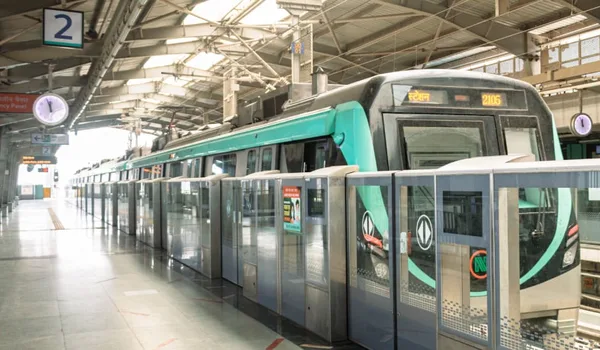
Both sectors are on the Noida–Greater Noida Expressway and share access to the Noida Metro Aqua Line operated by NMRC. Neither sector has a dedicated within-sector Aqua Line station. Sector 150 residents typically use the Sector 148 Aqua Line station via a short auto-rickshaw or cab transfer. Sector 168 residents use the nearest Aqua Line stations on the corridor; the specific closest station depends on the project's location within the sector and should be verified before buying.
On Expressway road access, both sectors are similarly positioned for trips to Noida's commercial nodes, the NSEZ, and the route to Delhi. The difference in metro access between the two sectors is marginal for most buyers — both require a last-mile vehicle transfer rather than a walk to the platform, and commute times to Sector 51 (the Blue Line interchange) are in a similar range. Where buyers plan to commute by metro, the practical test is the same in both sectors: verify the project-to-station route and auto availability at peak hours before committing.
Planning Character and Density
This is the sharpest difference between the two sectors. Sector 150's 80% open-space norm is a planning constraint that produces a specific residential character: towers are widely separated, the campus between buildings is genuinely green and usable, and the sense of space is uncommon compared to most NCR residential clusters. This is not a developer marketing claim — it is a Noida Authority planning rule enforced at the layout approval stage.
Sector 168 has no equivalent open-space mandate. Its development has accumulated at conventional Expressway densities over the years, meaning a wider range of project footprints and less uniformity in the campus-to-tower ratio between developments. For buyers who rank residential density highly — people who want to look out of their window at greenery rather than at adjacent towers — Sector 150's planning structure consistently delivers more of this than Sector 168 can match across its project portfolio.
The honest trade-off: Sector 150's planning quality comes at a price premium and with no ready-to-move inventory. Sector 168 offers more pricing variety and ready options, but at a lower guaranteed open-space standard sector-wide.
School Infrastructure — Where Sector 168 Has a Distinct Edge
Sector 168's specific advantage over Sector 150 is the presence of Shiv Nadar School on its doorstep. Shiv Nadar School is among the more sought-after secondary schools in the NCR, offering CBSE and Cambridge/International curricula with a campus that serves students from primary through senior secondary. For families who have already selected this school — or who want it as a top option when their children reach secondary age — buying in Sector 168 offers a school-commute convenience that Sector 150 cannot match.
Other well-regarded schools are accessible from both sectors via the Expressway corridor — Genesis Global School in Sector 132 and DPS in Sector 132 are within a short drive from either sector, as noted in the Sector 150 schools guide. The difference is that for Shiv Nadar School specifically, Sector 168 provides a proximity advantage that is relevant for a subset of buyers for whom that school is a non-negotiable filter.
Which Buyer Fits Which Sector
- Choose Sector 150 if: you want a new-launch project on a spacious, low-density campus, are comfortable with a 3–5 year construction timeline, prioritise open space and greenery in your daily living environment, and are willing to pay a premium for the planning structure that guarantees this.
- Choose Sector 168 if: proximity to Shiv Nadar School is a primary or strong-secondary filter in your purchase decision, you want more choice across price points (including older ready-to-move options), or you have a tighter budget that the lower entry end of Sector 168's inventory can accommodate.
- Investors seeking rental income: Sector 168's mixed and established inventory offers more near-term rental yield options than Sector 150's under-construction projects. Sector 150 may offer stronger long-term appreciation from its low-density premium as the sector matures, but with no guarantee and a longer wait for capital deployment.
- Families whose children are school-age now: Sector 168's Shiv Nadar School anchor makes it a more relevant choice for immediate school-commute convenience. Sector 150 suits families whose children are young or pre-school and who can plan the long-term residential environment over a five-plus year horizon.
- Buyers prioritising campus quality and open space: Sector 150's planning mandate makes it the structural winner for residents who want a low-density, green, spacious living environment as a daily reality, not just a brochure promise.
Where Prestige Bougainvillea Gardens Fits
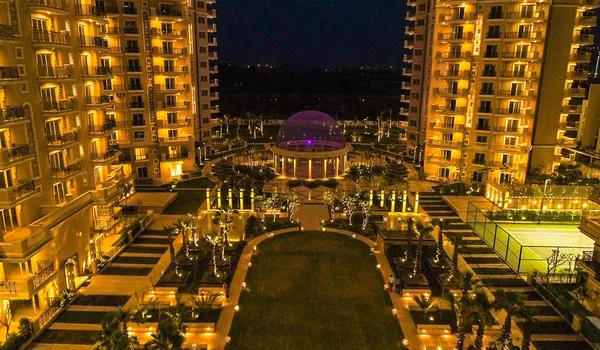
Prestige Bougainvillea Gardens is a pre-launch gated development in Sector 150, by Prestige Group, spanning approximately 1,150 apartments across 12 towers on a 15-acre campus with about 80% open space and a 50,000 sq ft clubhouse. Indicative pricing runs from approximately ₹94.25 lakh for a 1 BHK, ₹1.45 crore for a 2 BHK and ₹2.10 crore for a 3 BHK at roughly ₹14,500 per sq ft.
Its UP-RERA registration is at the applied stage for a pre-launch project — confirm the issued number on the portal before committing. Against Sector 168, Prestige Bougainvillea Gardens offers Sector 150's planning-mandated open space and the scale of a large branded campus — at a higher price and with a longer possession timeline (anticipated around December 2030) than most Sector 168 options. The comparison is between a new-launch campus environment built for open-space living and an established sector where a top school sits at the centre of the location logic.
Conclusion
Sector 150 and Sector 168 are both credible choices on the Noida–Greater Noida Expressway, but they serve different buyer profiles. Sector 150 wins on open space, campus scale and the discipline of its planning norm — it is the better choice for buyers who put residential environment quality at the top of their list and can wait. Sector 168 wins on school proximity — specifically Shiv Nadar School — and on price diversity across a wider range of project ages, making it more relevant for families with immediate school placement needs or buyers who want more entry-level options. Verify project status, RERA registration and the exact school admissions process before committing in either sector.
To compare Prestige Bougainvillea Gardens against your shortlist, review the current price list or request the floor plan details from the developer.
Frequently Asked Questions
1. How do property prices in Sector 150 and Sector 168 compare in 2026?
Sector 150 prices broadly range from ₹10,000 to ₹14,500 per sq ft for new and under-construction projects, reflecting its branded developer line-up and planning-mandated low density. Sector 168 prices broadly range from ₹8,500 to ₹13,500 per sq ft, covering a wider spread of project ages from older resale apartments at the lower end to newer launches near the top. The ranges overlap in the ₹10,000–₹13,500 band, so the two sectors are not as far apart in price for comparable new projects. The gap is most visible at the entry level, where Sector 168 has older resale options that Sector 150 does not.
2. What makes Sector 168 Noida significant as a residential sector?
Sector 168's most significant anchor is Shiv Nadar School, a respected institution offering CBSE and Cambridge curricula on an approximately 6.5-acre campus. For families who prioritise proximity to this school, Sector 168 has a specific advantage that is difficult to replicate elsewhere on the corridor. Beyond the school, Sector 168 is a mixed residential sector with a range of project ages and price points on the Noida–Greater Noida Expressway.
3. Which sector has better metro access — Sector 150 or Sector 168?
Both sectors rely on nearby Noida Metro Aqua Line stations operated by NMRC — neither has a dedicated within-sector station. Sector 150 uses Sector 148 Aqua Line station, typically reached by auto-rickshaw or cab. Sector 168 residents similarly use the nearest Aqua Line station for their location in the sector. For both sectors, verify the specific project-to-station route and auto availability at peak hours before buying.
4. What is the main difference in residential character between the two sectors?
Sector 150 is planned as a low-density sports city with approximately 80% of land as open space by Noida Authority norm, producing widely spaced towers with abundant greenery and a spacious campus feel. Sector 168 developed at more conventional Expressway densities with a mixed residential and institutional character. For residents who value open space and lower density as a daily-living reality, Sector 150's planning structure provides a more consistent guarantee of this than Sector 168 can offer across its varied project portfolio.
5. Is Sector 168 more affordable than Sector 150?
At the entry level, yes. Sector 168 has older resale apartments starting at lower per-square-foot rates than anything available in Sector 150's new-launch market. At the upper end — newer branded projects — the price ranges of the two sectors overlap significantly. Buyers with a tighter budget who want a ready or near-ready apartment will find more choice in Sector 168. Buyers seeking a new-launch campus with maximum open space will find Sector 150 the natural fit, at a higher average cost.
6. Where does Prestige Bougainvillea Gardens fit in the Sector 150 vs Sector 168 comparison?
Prestige Bougainvillea Gardens is a pre-launch gated development in Sector 150 by Prestige Group, with approximately 1,150 apartments across 12 towers on a 15-acre campus with about 80% open space. It sits in Sector 150's new-launch, low-density profile — suited to end-users and long-term buyers who value a spacious residential campus and modern specifications. Against a Sector 168 project, the key trade-offs are: Prestige Bougainvillea Gardens delivers more open space and a larger campus with a longer possession wait; Sector 168 delivers Shiv Nadar School proximity and a wider range of ready and near-ready options at lower entry prices.
Prestige Bougainvillea Gardens Blog